Rideshare injury guide
Texas rideshare insurance and crash records
In Texas, the minimum liability insurance limits for Uber and Lyft drivers change when a driver accepts a ride. Trip records can help show whether the driver was still waiting for a request or had already accepted one when the crash happened.
For ordinary Uber and Lyft passenger rides in Texas using personal vehicles. Other states, delivery work and commercially licensed services may have different arrangements. The policy in effect on the crash date matters.
Whose insurance do the Texas limits describe?
The limits below concern insurance for claims against the rideshare driver. This liability coverage may pay covered claims for injuries to passengers or other people, or damage to their property, when that driver is legally responsible for the crash.
Texas allows the driver, the rideshare company, or both to provide the required coverage. These are not insurance limits a passenger must buy. They are minimum policy limits, not an amount owed to an injured person.
Additional Information: Texas Insurance Code Chapter 1954 · Texas Department of Insurance auto insurance guide · Uber rideshare insurance information
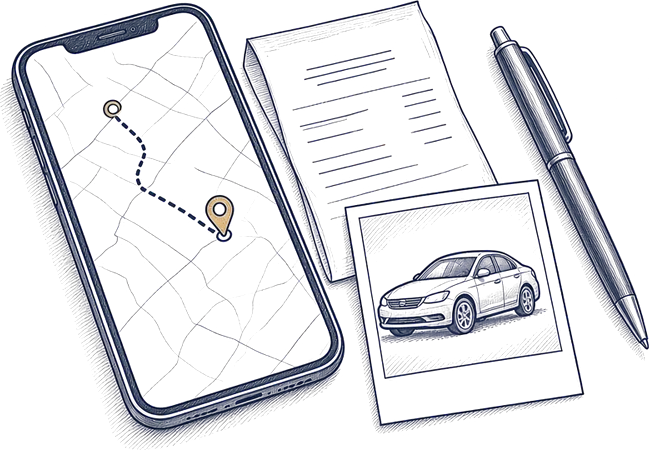
Save the records you can access
Get to safety and seek medical help for injuries.
Organize the information you already have without delaying care or putting yourself at risk. Keep original files and a backup; a screenshot can help record what an app displayed, but may not contain the full trip record.
Trip details
Receipt, trip identifier if shown, pickup and destination, route, timestamps, driver name and vehicle information.
Crash details
Photographs, location, crash-report number, witness contacts and the location of cameras that may have recorded the collision.
Communications
App reports, support messages, claim numbers, emails, letters and notes of insurer calls.
Injury and work records
Appointment details, bills, work restrictions, missed shifts and available earnings information.
Insurance documents
Policies, declarations pages and rideshare endorsements you can locate.
Which other insurance may matter?
If another driver caused the crash, that driver’s liability insurance may be relevant. Being an Uber or Lyft passenger does not make the rideshare driver responsible or automatically trigger the rideshare liability policy.
Separate coverages may address injuries regardless of fault, an uninsured driver, or damage to the rideshare vehicle. These can include personal injury protection (PIP), medical payments, uninsured/underinsured motorist (UM/UIM), and collision coverage. Availability and eligibility depend on the actual policies; the liability limits above do not establish those benefits.
Personal injury protection (PIP)
Can help pay medical bills and lost income, regardless of who caused the crash.
Medical payments
Can help pay medical and funeral expenses, regardless of who caused the crash.
Uninsured/underinsured motorist (UM/UIM)
Can help when the driver who caused the crash has no insurance or not enough.
Collision
Can help pay to repair or replace the insured vehicle, regardless of fault.
Additional Information: Uber rideshare insurance information · Texas Department of Insurance auto insurance guide
What if an uninsured driver caused the crash?
Do not assume Uber provides uninsured or underinsured motorist coverage in Texas. The Texas certificate linked by Uber and checked November 2, 2026, lists no UM/UIM coverage for the March 1, 2026–March 1, 2027 policy period, both while waiting and during an accepted ride.
That certificate is an informational summary, not the policy contract. Your own auto policy or another applicable policy may offer benefits. RMQ can review the coverage in effect on the date of your crash.
Additional Information: Uber Texas insurance certificate for 2026–2027 · Texas Department of Insurance rideshare guidance
Some evidence must be requested from others
A trip receipt may not resolve every timing question. Detailed app activity, dispatch records, vehicle data and camera footage may be held by the platform, drivers or other businesses.
We can help identify records the rideshare company or others may hold, explain which records need to be preserved promptly, and tell you what you can provide to document your losses. A request does not guarantee that a record exists or will be produced, and you do not need to collect someone else’s private account information yourself.
Keep reporting separate from a final settlement
Keep a copy of the facts you report and the claim numbers you receive. Ask whose insurer is contacting you and what a requested document or statement is for. Your own policy may impose notice or cooperation duties; obtain advice about those obligations rather than ignoring correspondence.
Before signing a release, understand which claims it resolves and how ongoing treatment or other insurance may be affected. Reporting the crash through an app does not by itself file a lawsuit or resolve your injury claim.
Bring your questions even if the file is incomplete
A useful first conversation can start with the crash date and location, your role in the trip, the injuries and the information you have received from insurers. Tell RMQ what is missing as well as what you have.
You can contact us with what you have. We’ll explain which records need attention first, who would handle your matter, and what working with RMQ would involve. Our main Uber and Lyft injury page explains the different questions facing passengers, other road users and rideshare drivers.
Frequently asked questions
We’re ready to listen
Talk with our team.
Tell us what happened and the questions you have. We can discuss whether RMQ may be able to help and what the next step could be.